
COMMERCIAL REAL ESTATE TORONTO
Toronto's commercial real estate market in 2026 is not one market but several, each operating under different conditions and rewarding different analytical approaches. A retail storefront on an established corridor, a mixed use building in a neighbourhood undergoing zoning transition, a heritage commercial building repurposed for creative or professional use, an office condominium in a purpose-built building near a transit node: each of these assets exists within its own supply and demand context, attracts its own buyer or tenant profile, and requires a different method of valuation and positioning.
Shirley Yoon Kim is a commercial real estate broker at Sotheby's International Realty Canada, with more than eighteen years of experience across Toronto's commercial property market. Her practice covers acquisition, disposition, and leasing across the full range of commercial asset types in downtown Toronto and Ontario, with particular depth in mixed use buildings, heritage commercial properties, and adaptive reuse assets where architecture and context are inseparable from value.
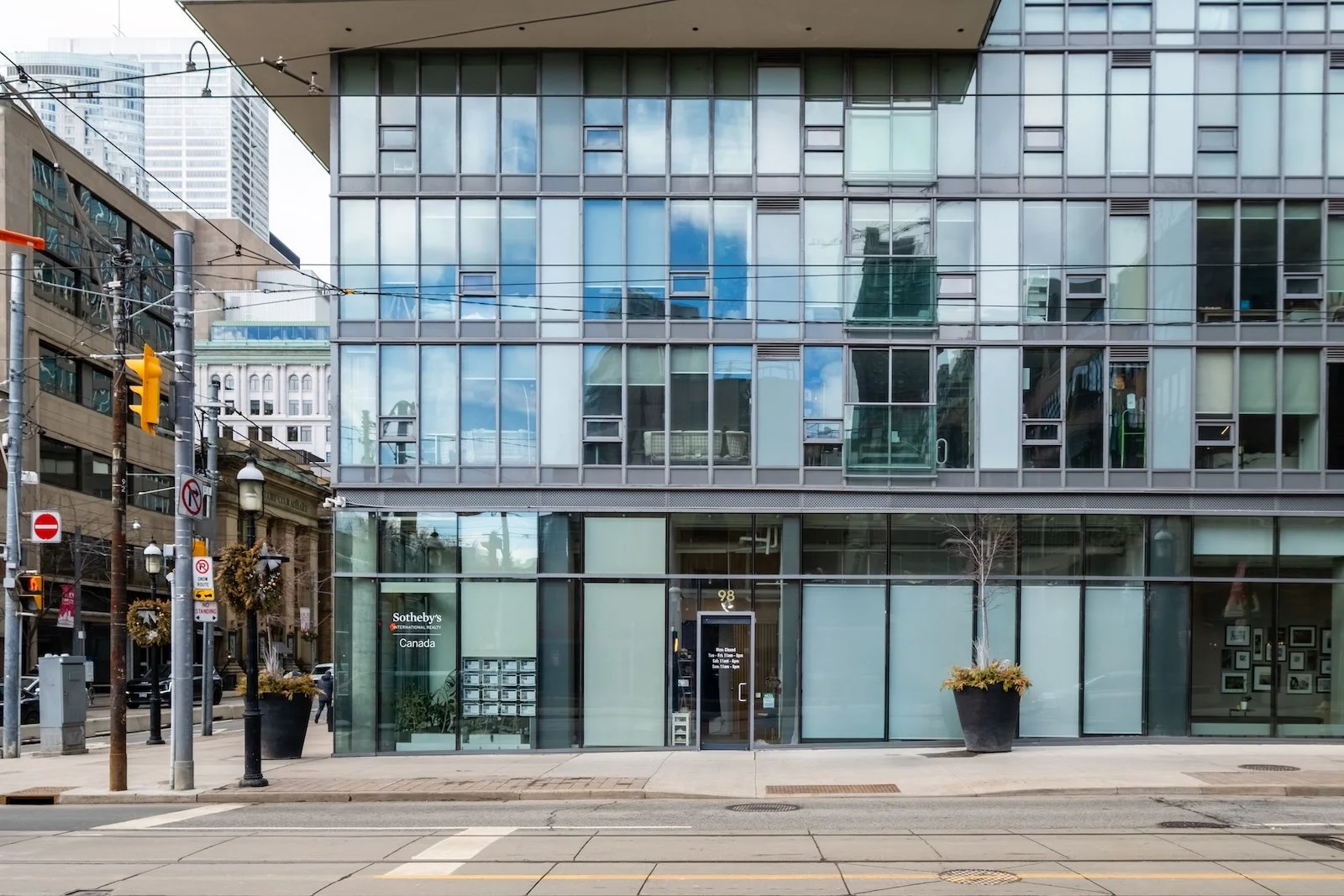
The Market
Downtown Toronto's commercial corridors have absorbed significant structural change in recent years. The normalization of hybrid work has altered demand for conventional office space while intensifying interest in owner-user commercial properties where the business and the building occupy the same balance sheet. Heritage and adaptive reuse assets have appreciated as genuinely characterful industrial and commercial buildings have grown scarcer. Mixed use corridors have continued to attract investor capital from buyers who value dual income streams and the long-term scarcity of Victorian and Edwardian commercial fabric.
Alongside those shifts, the transit priority corridors designated in recent years have introduced new zoning conditions on several commercial streets, creating a layer of development potential beneath the existing income that reshapes how those buildings are assessed by sophisticated buyers. Reading a commercial property in Toronto accurately in 2026 means reading the corridor, the zoning, the tenancy, and the physical condition together, not in sequence.
The Buildings
Commercial real estate in Toronto encompasses a wider range of building types than the word implies. At one end, the ground-floor retail unit within a mixed use Victorian building on Queen West, typically 600 to 1,500 square feet, brick-walled, with a frontage that has served commerce for a century. At the other, the former industrial building converted to office or hospitality use, with open span volumes, timber columns, and concrete floors that newer construction can reference but cannot reproduce. Between them, commercial condominiums in purpose-built mid-century and contemporary buildings, office suites within heritage structures, and freestanding commercial buildings on corner lots that carry both income and assembly potential.
Each building type attracts a different buyer and requires a different frame for valuation and marketing. The spatial quality of an adaptive reuse commercial building communicates to buyers who understand what it represents; those buyers are not found through the same channels as buyers for a stabilized commercial condominium seeking cap rate yield.
The Work
Shirley Yoon Kim's commercial real estate practice at Sotheby's International Realty Canada is structured around a considered reading of each asset before any action is recommended. The corridors of downtown Toronto are known in detail, from current cap rates on Ossington to lease rates on Bloor West to the zoning implications of the Major Transit Station Area designations that have altered the development calculus on several key streets. That granularity is the foundation of every advisory, whether the engagement is a sale, an acquisition, or a leasing mandate.
For sellers of commercial properties with distinctive character, Sotheby's international network extends reach to a buyer audience whose frame of reference is not limited to the Greater Toronto Area. For buyers, it means working with a commercial real estate broker whose analysis encompasses corridor context, designation status, tenancy structure, and long-term trajectory simultaneously.
Frequently Asked Questions
-
Toronto's commercial market includes ground-floor retail and storefront spaces, mixed use buildings combining commercial and residential uses, adaptive reuse properties in former industrial and heritage buildings, office condominiums and commercial suites, and freestanding commercial buildings with income or development potential. The most active inventory concentrates along the downtown corridors: Queen West, King West, Dundas West, Bloor West, Ossington, and the Annex.
-
Downtown Toronto's commercial market reflects structural shifts across all asset types. Mixed use corridors remain active for both investment and owner use. Heritage and adaptive reuse properties continue to appreciate as genuine supply contracts. Office condominium demand has stabilized at levels below pre-pandemic norms. Retail leasing is strongest in food, beverage, and service uses on established pedestrian corridors. Each sub-market requires separate analysis.
-
Commercial properties in Toronto are primarily valued using income capitalization, dividing the net operating income by a cap rate appropriate to the property type, location, and lease profile. Buildings with strong, long-term tenancies at market rents are valued on current income. Buildings with below-market rents, short remaining lease terms, or development potential are valued on a combination of current income and future upside, each weighted differently by different buyer profiles.
-
Commercial transactions involve different legal frameworks, financing structures, and due diligence requirements than residential ones. Commercial leases are governed by contract law rather than the Residential Tenancies Act. Financing is typically at higher rates and lower loan-to-value ratios. Due diligence includes environmental review, lease estoppel certificates, zoning confirmation, and a full building systems review alongside the physical inspection.
-
Shirley Yoon Kim's practice at Sotheby's International Realty Canada is built specifically around commercial and mixed use properties in downtown Toronto, with more than eighteen years of direct market experience. Her depth in heritage buildings, adaptive reuse assets, and architecturally distinctive commercial properties reflects a practice oriented toward assets where context and character shape value in ways that conventional analysis underweights. Every engagement is handled directly by Shirley from initial consultation through closing.
Connect with Shirley Yoon Kim to discuss a commercial property you are considering buying, selling, leasing or evaluating.