
HERITAGE BUILDINGS & ADAPTIVE REUSE IN TORONTO
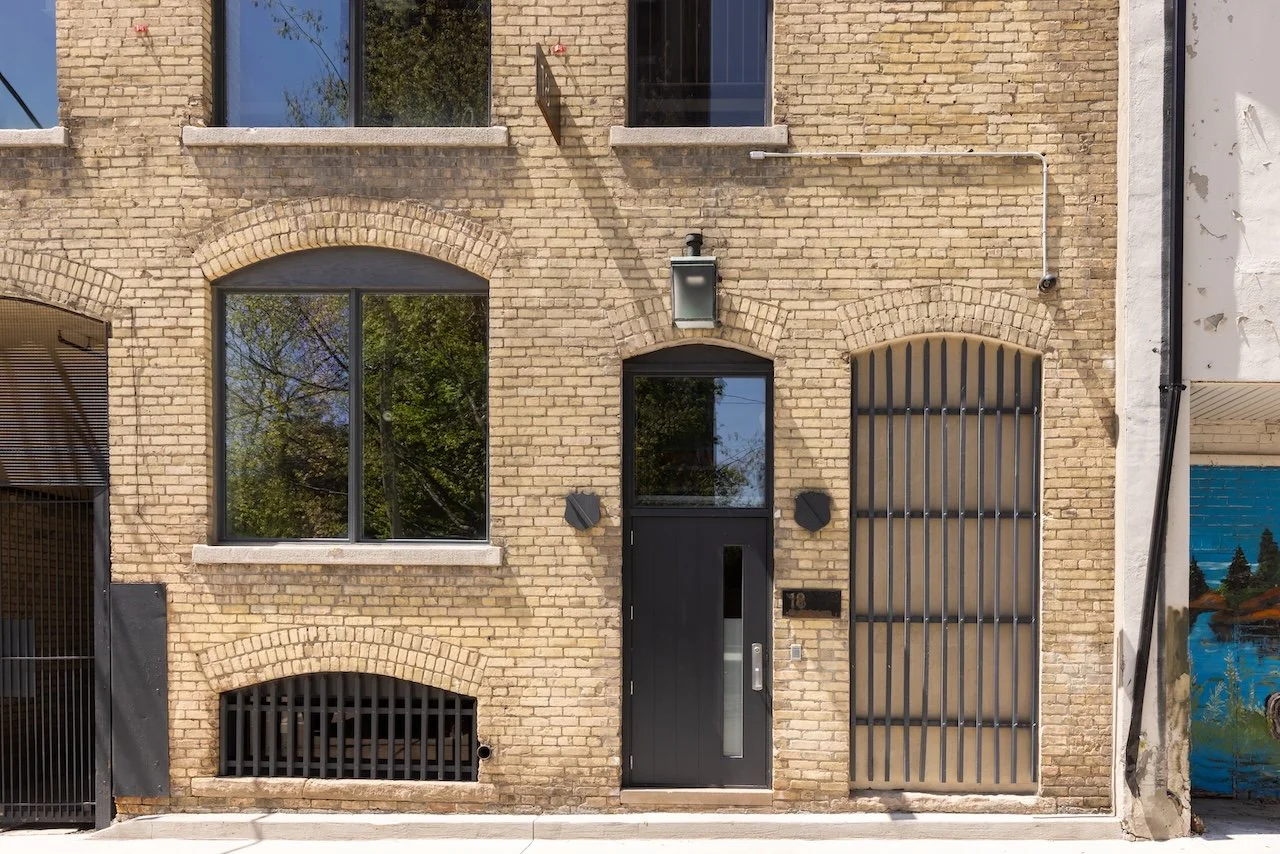
Some of the most significant properties in Toronto are those that carry evidence of a previous life. A former factory building whose timber columns and concrete floors have survived three successive tenancies. A nineteenth-century retail block on a commercial corridor, designated heritage but fully active in its commercial use, its brick façade intact to the roofline. A coach house behind a Victorian main street building, repurposed as a studio, a dwelling, or an ancillary commercial space. These buildings hold something that new construction cannot manufacture: a material record of how the city was built and how it has changed, legible to anyone willing to read it.
Shirley Yoon Kim is a commercial real estate broker at Sotheby's International Realty Canada whose practice is oriented specifically toward heritage buildings and adaptive reuse properties in Toronto. Her degree in Art Criticism and Curatorial Practice informs a reading of these assets that goes beyond their financial profile, to the architectural conditions, designation status, and urban context that shape their value and their future. Heritage and adaptive reuse transactions are not a secondary category here. They are the core of the practice.
The Buildings
Adaptive reuse describes the conversion of a building from its original purpose to a new one, retaining the structure, material character, and often the spatial logic of what was built. In Toronto, that has produced some of the most valued commercial properties in the city: former industrial buildings repurposed as creative offices or hospitality venues, Victorian commercial blocks given over to gallery or professional use, institutional buildings converted to residential or mixed use. Each completed project reduces the available supply further; there is no mechanism by which new adaptive reuse buildings enter the market.
Heritage designation in Ontario takes two primary forms. A property designated under Part IV of the Ontario Heritage Act as an individual heritage property carries specific protected attributes, listed in the designation bylaw, that require Heritage Permit approval before alteration. A property within a Heritage Conservation District under Part V carries different protections, shaped by the district's character statement. Many properties appear on the City of Toronto Heritage Register without full designation, a status that carries fewer restrictions but signals the city's intent to consider designation if significant change is proposed.
Understanding which attributes are protected, and to what degree, is the necessary starting point for any heritage acquisition or disposition.
Designation & Due Diligence
For buyers of heritage commercial and mixed use properties in Toronto, due diligence extends beyond the standard physical and financial review. The designation bylaw and the property's heritage permit history establish what work has been approved and what remains subject to Heritage Preservation Services review. The physical condition of the designated attributes, whether original masonry, fenestration, structural elements, or interior features, informs both the cost of compliance and the timeline for any planned improvements.
Not every architecturally significant property carries formal designation. A building may possess genuine material quality, original construction detail, and spatial character without appearing on the Heritage Register, and may be transacted without the regulatory complexity that designation brings. Identifying and positioning these buildings accurately requires architectural literacy rather than regulatory status alone, a distinction that separates this practice from generalist commercial brokerage.
The Market
Demand for heritage and adaptive reuse commercial properties in Toronto has strengthened through successive market cycles, driven by the contraction of genuine supply and the growing recognition among buyers and tenants that characterful buildings command rental premiums and hold value in ways that speculative construction does not. The most sought-after properties, fully converted heritage buildings in active corridors with clear tenancy profiles and no outstanding heritage permit applications, attract competitive buyer pools that include domestic investors, institutional buyers, and international capital with a long-term view of Toronto's urban fabric.
Buildings earlier in their adaptive reuse trajectory, those requiring conversion work, outstanding heritage approvals, or a more patient buyer, offer a different proposition: entry at a discount to stabilized value, in exchange for the work and time required to realize it.
Shirley Yoon Kim's practice at Sotheby's International Realty Canada is built around both ends of that spectrum, and the full range of heritage and adaptive reuse assets between them.
Frequently Asked Questions
-
A heritage building in Toronto has been designated under the Ontario Heritage Act for its architectural, historical, contextual, or associative significance. Designated properties appear on the City of Toronto Heritage Register and have specific protected attributes listed in the designation bylaw. Changes to those attributes require Heritage Permit approval from the City. Some properties are listed on the Register without full designation, which carries fewer restrictions but may indicate future designation intent.
-
Alterations to a designated heritage property in Toronto are permitted, subject to Heritage Permit approval when they affect protected attributes. The scope of permitted work depends on the specific designation bylaw and which attributes are listed as protected. Interior renovations are often possible without a Heritage Permit if the protected attributes are exterior. Engaging a heritage architect or consultant before purchasing establishes feasibility before a commitment is made.
-
Adaptive reuse is the conversion of a building from its original use to a new one, retaining the structure and often the material character of what was built. In Toronto, the most common forms involve former industrial or warehouse buildings converted to office, hospitality, or residential use, and heritage commercial buildings repurposed for gallery, retail, or professional tenancy. The spatial qualities these buildings offer, generous volumes, original materials, structural honesty, are not reproducible in new construction.
-
Heritage properties in Toronto are valued on a combination of income-generating potential and the replacement cost premium their spatial and material qualities represent. In well-maintained condition on active corridors, designated buildings often trade at or above comparable non-designated properties, reflecting scarcity and the difficulty of replication. Buildings requiring heritage permit approvals or conversion work are valued with those timelines and costs factored into the analysis.
-
Shirley Yoon Kim's practice at Sotheby's International Realty Canada is oriented specifically toward heritage buildings and adaptive reuse assets, informed by a degree in Art Criticism and Curatorial Practice and more than eighteen years of direct market experience. The buyer profile for these properties often includes international investors who understand architectural character at a global scale. Sotheby's international network reaches that audience in a way that conventional commercial brokerage cannot.
Connect with Shirley Yoon Kim to discuss a commercial property you are considering buying, selling, leasing or evaluating.