
RETAIL SPACE FOR LEASE TORONTO
The challenge of finding retail space for lease in Toronto is not a shortage of available listings. It is the gap between what appears on a listing platform and what is actually suited to a specific use, business model, and long-term position on a specific corridor. A space that reads well at the listing level may carry a lease structure that systematically favours the landlord, sit on a block where foot traffic does not support the intended tenant mix, or come with physical constraints that complicate the business it is meant to house. Reading a commercial leasing opportunity accurately means reading the building, the block, the corridor, and the lease simultaneously.
Shirley Yoon Kim is a commercial real estate broker at Sotheby's International Realty Canada who represents both tenants and landlords across Toronto's downtown retail corridors, including Queen West, King West, Dundas West, Bloor West, Ossington Avenue, and the Annex. Her knowledge of these corridors extends to block-level conditions, current lease structures, and the layer of inventory that never reaches a public listing platform. Retail leasing mandates are handled directly by Shirley throughout.
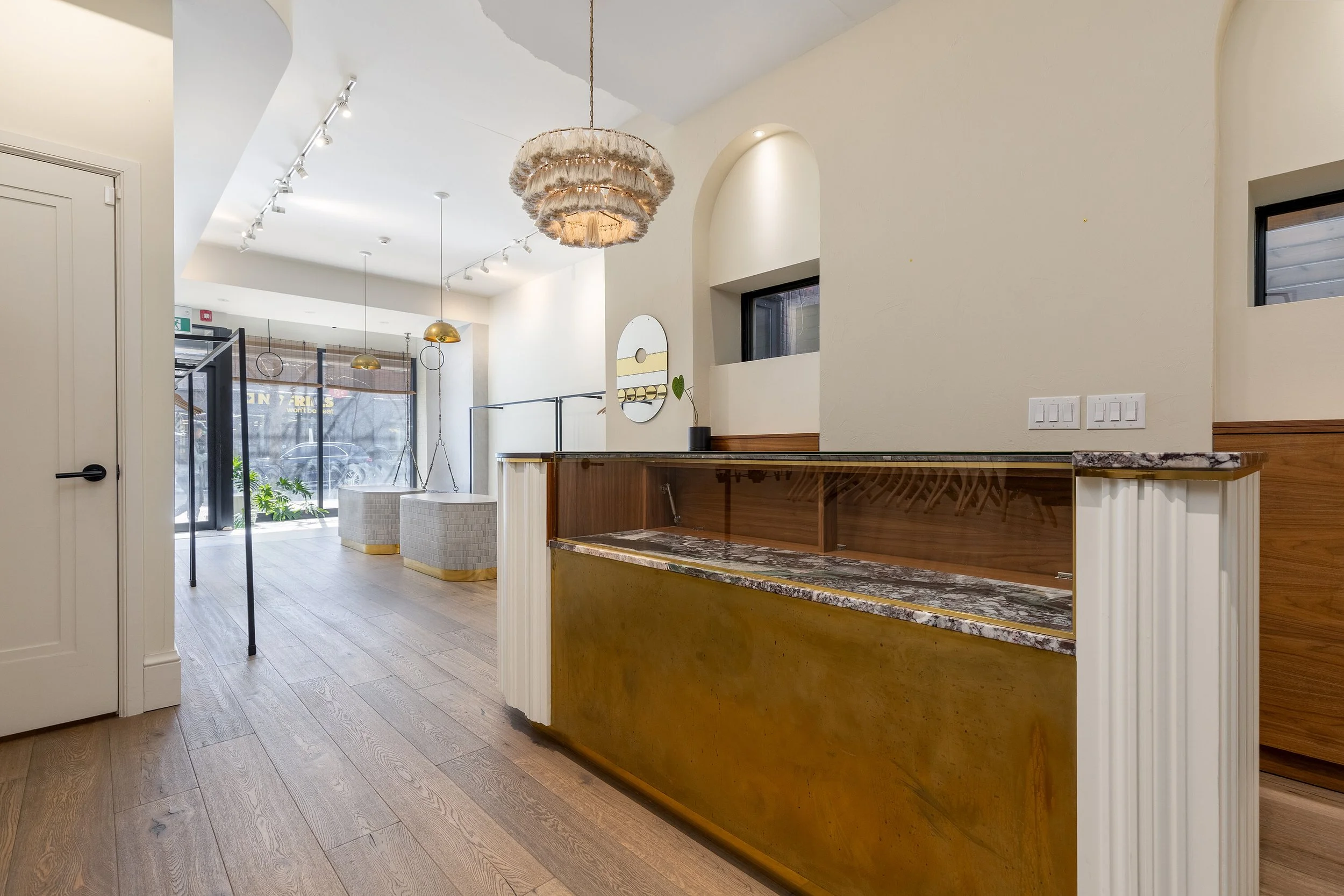
The Corridors
Toronto's established retail corridors are not interchangeable. Queen West between Bathurst and Dufferin supports a density of independent food, retail, and gallery uses that has made it one of the city's most recognized commercial addresses; rents on the most active blocks reflect that recognition. King West, reshaped significantly by transit priority designation and the residential density that has followed, commands the city's highest retail rents in its most active stretch and attracts hospitality uses that can support them. Ossington Avenue, smaller in scale and more self-contained, sustains a stable mix of independent operators on a street where scarcity of inventory is itself part of the appeal. Bloor West offers a range of commercial contexts from academic and professional to neighbourhood-serving retail across several distinct sub-sections. College Street and Dundas West offer earlier-stage positioning at lower rents, for businesses whose calculus includes corridor trajectory alongside current traffic.
Understanding which corridor suits a specific business involves more than matching categories. It involves a detailed reading of the block-level conditions, the existing tenant mix, the lease structures that landlords on that stretch typically offer, and the trajectory of the corridor over the tenant's anticipated lease term.
Tenant Representation
For tenants seeking commercial space for lease in Toronto, the process begins with a clear brief: use type, size and configuration, preferred corridor or neighbourhood, lease term and budget, and any physical requirements specific to the business. From that brief, a search is structured not just across publicly listed inventory but across the less visible layer of spaces that are quietly available, approaching the end of existing lease terms, or held by landlords whose leasing relationships are managed without public listing.
Commercial lease negotiation covers more than base rent. The terms that carry the most long-term consequence include the tenant improvement allowance, the free rent period, the permitted use clause, renewal option terms, subletting and assignment rights, and the landlord's obligations for structural and building system maintenance. A lease negotiated with full knowledge of current market conditions, including what comparable tenants are achieving on the same corridor, produces materially different outcomes than one negotiated against the landlord's standard form alone.
Landlord Representation
For landlords seeking tenants for ground-floor commercial or retail space in Toronto, the objective is a qualified tenant on terms that protect the asset's income and physical condition over the full lease period. Positioning a commercial space for leasing means communicating what the space genuinely offers to the tenant profile it is suited to: its dimensions and configuration, its physical condition and recent improvements, its corridor context and the tenant mix it sits within.
Shirley Yoon Kim's work with landlords draws on her knowledge of which tenant types perform on which corridors, what lease structures the current market supports, and where the right tenant for a specific space is most likely to be found. The quality of the tenant attracted is a direct function of the specificity of the search and the reach of the representation.
Frequently Asked Questions
-
Ground-floor retail asking rents on Toronto's established downtown corridors range from approximately $28 to $55 per square foot net, with significant variation by corridor, frontage, and configuration. King West commands the highest rents among the major commercial streets. Bloor West and Dundas West sit lower. Occupancy costs include operating expenses and property taxes passed through on a net basis, typically adding $12 to $20 per square foot to the total occupancy cost.
-
A net lease, the standard structure in Toronto's retail market, requires the tenant to pay base rent plus a proportionate share of the building's operating expenses and property taxes. These additional costs are estimated at the start of the lease year and reconciled against actual costs at year end. Reviewing the building's operating cost history before signing provides the most accurate picture of total occupancy cost beyond the base rent.
-
Commercial retail leases in Toronto most commonly run five years, with an option to renew for a further five. Shorter terms of one to three years are sometimes available in buildings with development potential or landlord transition plans. Longer initial terms can often be negotiated in exchange for a tenant improvement allowance or a stepped rent structure that provides lower base rent in the early years of the lease.
-
The terms with the most long-term consequence in a Toronto commercial lease are the tenant improvement allowance, the free rent period, the permitted use clause, the renewal option and the basis on which renewal rent will be set, subletting and assignment rights, and the landlord's structural maintenance obligations. Tenants who focus only on the base rent often find the lease's other provisions more consequential over the full term.
-
A meaningful portion of commercial leasing activity in Toronto involves spaces that have not been publicly listed, including buildings where leasing is managed through broker relationships, properties approaching the end of an existing lease term, and spaces that landlords prefer to fill quietly. Shirley Yoon Kim's active corridor relationships at Sotheby's International Realty Canada provide access to this layer of inventory alongside publicly available listings, across all of Toronto's major downtown retail corridors.
Connect with Shirley Yoon Kim to discuss a commercial property you are considering buying, selling, leasing or evaluating.