
OSSINGTON COMMERCIAL REAL ESTATE
Running south from Dundas Street West to Queen Street West, Ossington Avenue became, in the late 2000s, one of the most closely watched commercial streets in Toronto, and then, relatively quickly, one of the most stable. A concentration of independent bars, restaurants, and galleries established the corridor's character in a short period; the properties that housed them attracted investment interest, and the prices moved. That phase has passed. Ossington in 2026 is a mature corridor, with consistent tenant demand, tested rental rates, and a supply of buildings that has not meaningfully grown in a generation.
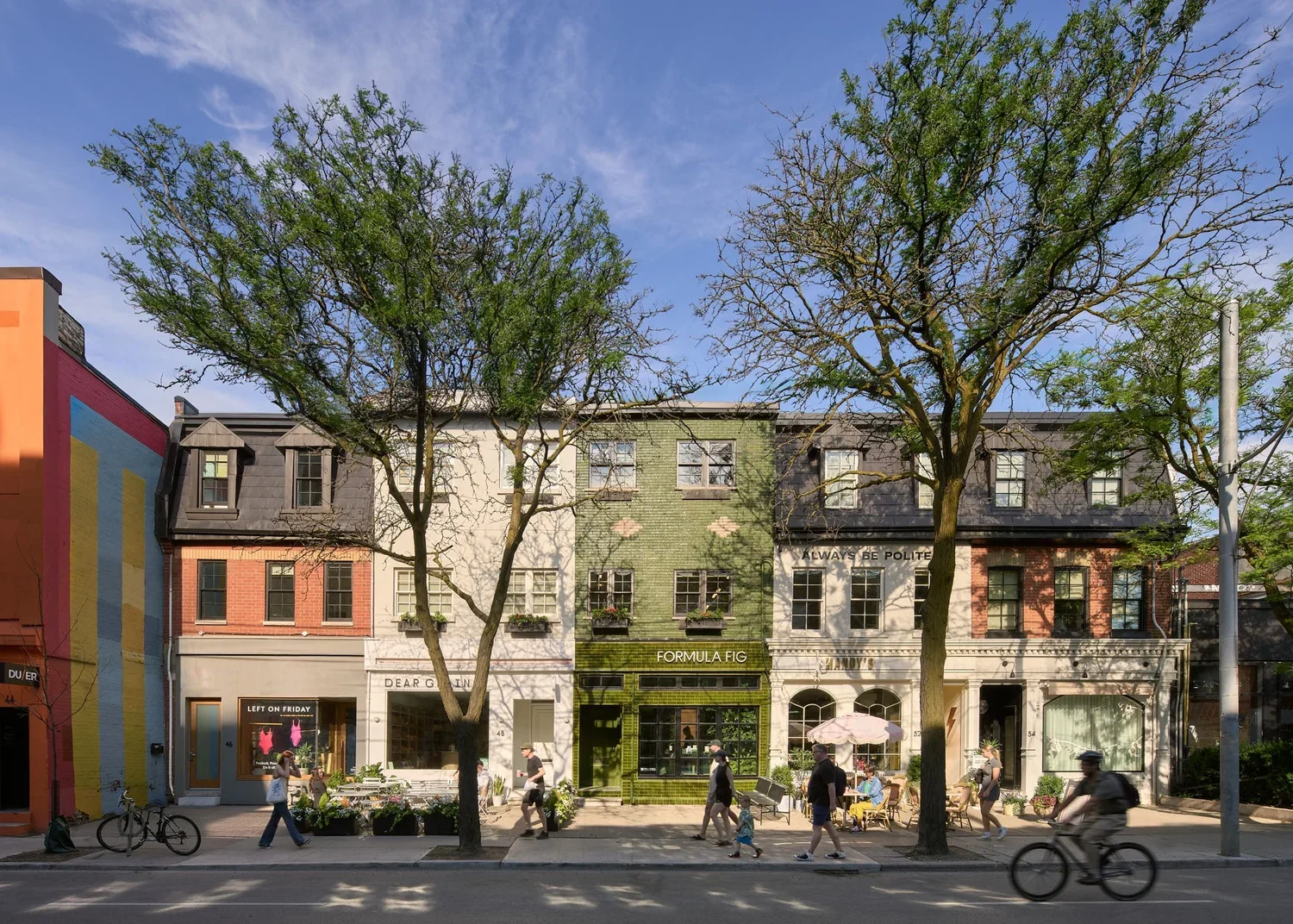
The Corridor
The buildings on Ossington between Dundas and Queen are small by any commercial real estate standard: two-storey Victorian brick with frontages of 16 to 22 feet, set flush to the sidewalk, with a ground-floor commercial space and a single residential apartment above. The lots are narrow, the buildings close together, and the scale is constitutive of the corridor's appeal. Ossington does not accommodate the business that requires a large footprint, a visible loading area, or a parking presence. The businesses that work here are ones that understand the space they are in and build their identity around it.
Many of the buildings carry listings on the City of Toronto Heritage Register. The physical integrity of the corridor, its intact Victorian masonry and consistent rooflines, has been largely preserved through the period of commercial intensification, and that preservation is part of what makes Ossington valuable as an address. Supply is finite in a way that more physically varied corridors are not.
The Market
Mixed use buildings on Ossington represent a stabilized investment proposition. Ground-floor commercial tenancies on the most active blocks are typically food, beverage, gallery, or design-sector operators, often on leases with specific terms that require careful review before an acquisition. Residential apartments above are typically single units, governed by the Residential Tenancies Act, and frequently occupied by long-term tenants at rents below current market levels.
The investment analysis on an Ossington building typically rests on two variables: the commercial lease, its remaining term, renewal options, and rent relative to current market; and the residential tenancy, its rent level and vacancy timeline. Buildings where both components have near-term normalization potential are valued accordingly. Buildings with long-term leases at below-market commercial rents require a hold-period analysis that accounts for the income growth available at renewal.
Owner-user acquisitions, for businesses that want to operate from the ground floor while holding the residential income, require early identification of buildings whose commercial leases are approaching expiry. Ossington's inventory is small enough that timing and market awareness matter considerably.
Shirley Yoon Kim advises buyers and sellers of Ossington Avenue commercial and mixed use properties through Sotheby's International Realty Canada. Scarcity is what Ossington offers, and the advisory work on this corridor is built around knowing what is available before it appears publicly, and understanding the lease structures that determine when and how each building can be repositioned. The practice covers acquisition and disposition of mixed use properties on the corridor, retail leasing for both tenants and landlords, and owner-user acquisitions timed to lease rollover.
Frequently Asked Questions
-
Ossington commercial real estate is a stabilized, mature investment with a limited and non-expanding supply of mixed use Victorian buildings. Ground-floor commercial rents on the active blocks between Dundas and Queen currently range from approximately $35 to $50 per square foot net. Cap rates reflect the corridor's stability and inventory scarcity. Properties rarely remain available for long when accurately priced, and the investment case rests on durable income from a finite asset type.
-
Buying a building on Ossington for owner use requires planning around the existing tenancy. Most buildings carry commercial leases with terms in place; vacant possession typically comes through purchasing a building where the commercial lease is near expiry. Timing and off-market awareness are more relevant on Ossington than on most corridors, given the small size of the inventory and the pace at which suitable buildings are acquired when they become available.
-
Ossington's commercial real estate value rests on established tenant demand, consistent pedestrian traffic from a corridor with a clear and durable identity, and a finite supply of characterful Victorian mixed use buildings that cannot be replicated. There is no mechanism by which the inventory of Ossington storefronts grows. That scarcity, combined with a buyer pool that understands it, has supported values through market cycles that have affected more speculative commercial assets more severely.
Connect with Shirley Yoon Kim to discuss a commercial property you are considering buying, selling, leasing or evaluating.