
RONCESVALLES COMMERCIAL REAL ESTATE
Running south from Dundas Street West to Queen Street West through one of Toronto's most coherent residential neighbourhoods, Roncesvalles Avenue functions as a village street in the most precise sense: a commercial corridor sustained by the loyalty of the community it serves rather than by destination traffic from elsewhere in the city. The independent food, retail, and service businesses that line it operate within a clear relationship to the streets and families behind them, and that relationship, built over years and in some cases generations, produces the kind of commercial stability that more visible, more trafficked corridors do not always sustain.
The Corridor
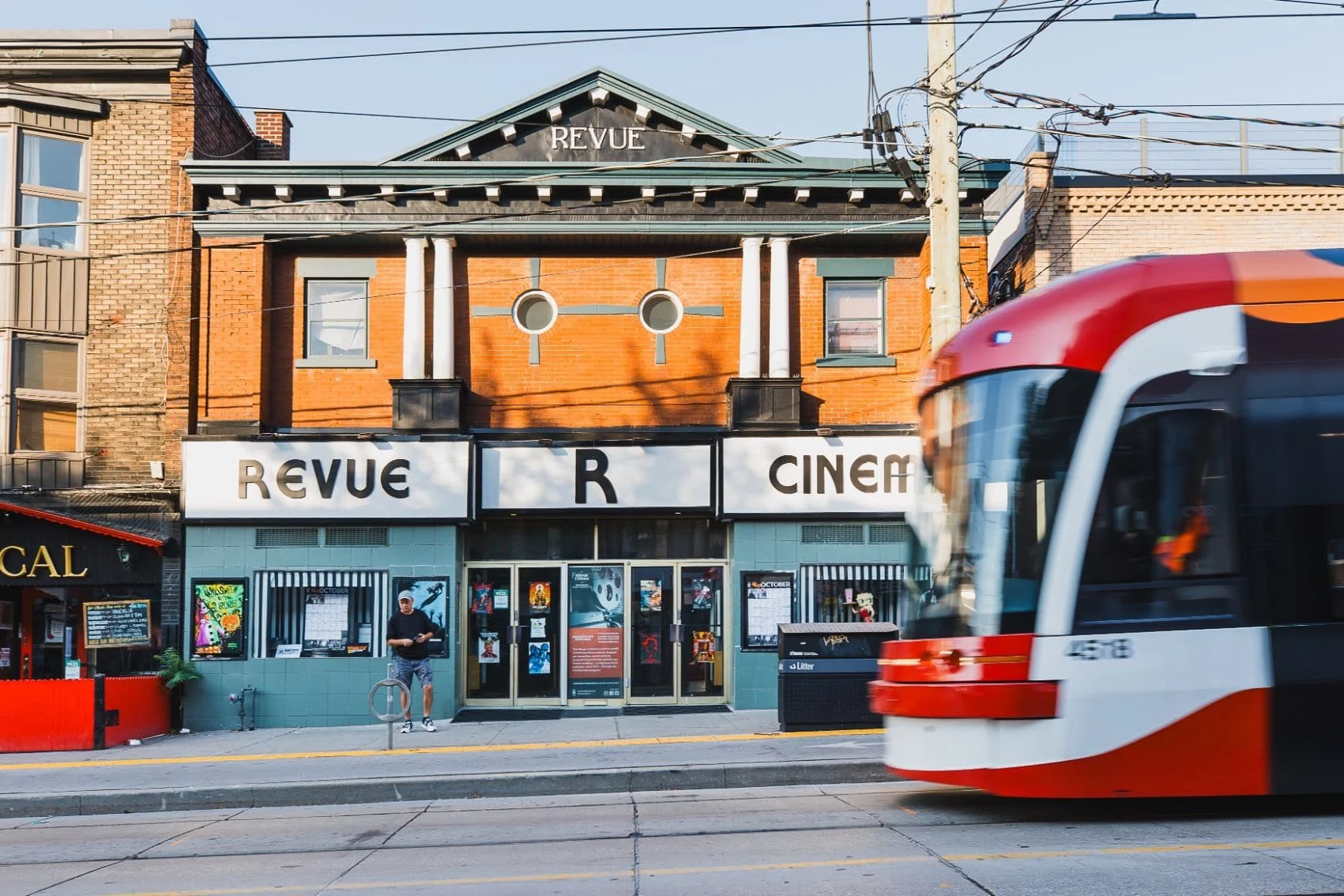
The buildings on Roncesvalles are predominantly two-storey Victorian brick, set close to the sidewalk, with frontages of 18 to 25 feet and ground-floor commercial spaces that have housed continuous commercial use since the street was built. Several are listed on the City of Toronto Heritage Register. The physical consistency of the corridor, its intact Victorian masonry, its narrow lots, its human scale, has been largely preserved through decades of commercial activity that would have erased it on a more prominent street. That preservation is both a constraint and a source of the corridor's identity.
The businesses that work on Roncesvalles are ones that fit the scale of the buildings and the character of the neighbourhood. The corridor does not accommodate uses that require large floor plates, high-volume destination traffic, or the kind of visibility that only an arterial street with significant through-traffic can provide. It accommodates, very well, the neighbourhood café, the independent grocer, the professional or wellness practice, the specialty retailer whose customer base is formed by the surrounding community.
The Market
Mixed use buildings on Roncesvalles represent a straightforward investment proposition, oriented toward income stability rather than appreciation-driven returns. Ground-floor commercial rents are lower than on comparable properties on Queen West or Ossington, reflecting the corridor's neighbourhood scale and the modest foot traffic that sustains the businesses within it. Cap rates are correspondingly higher, and the investment case rests on durable income from a small, stable building in a neighbourhood whose residential character has not fundamentally changed in decades.
For investors seeking yield without the volatility of more prominent corridors, Roncesvalles is worth serious consideration. The tenants that occupy its storefronts tend toward longevity; the residential community behind the corridor is among the more stable in the inner city; and the supply of Victorian mixed use buildings on a street of this character and scale does not grow.
Shirley Yoon Kim advises buyers and sellers of Roncesvalles commercial and mixed use properties through Sotheby's International Realty Canada. The practice covers acquisition and disposition of mixed use properties on the corridor, retail leasing for both tenants and landlords, and the income analysis specific to village-scale Victorian buildings where stability and yield are the relevant metrics. What is there now is, in most respects, what was there twenty years ago and will be there twenty years hence, and the investment case rests precisely on that continuity.
Frequently Asked Questions
-
Roncesvalles commercial real estate functions as a neighbourhood village street rather than a destination corridor. Its commercial activity is sustained primarily by the immediate residential community, producing more stable tenancies and more consistent pedestrian traffic than corridors dependent on destination appeal. The trade-off is lower rents and more limited rental growth compared to higher-profile streets. For investors who value income stability over rapid appreciation, that profile has distinct advantages.
-
Roncesvalles commercial properties offer higher cap rates than the city's more prominent commercial streets, reflecting lower current rents and a neighbourhood-service tenant profile. The investment case is consistency: the corridor has not experienced the volatility of more speculative commercial streets, and the tenant base tends toward long-term operators. Buildings are small and inventory is limited, which supports values in a way that larger, less coherent corridors do not.
-
Roncesvalles retail tenants are primarily independent food and beverage operators, specialty food retail, personal service businesses, professional and medical practices, and neighbourhood-serving retail. The tenant profile is oriented toward the day-to-day life of the surrounding residential community. Destination or experience retail oriented toward city-wide traffic is generally not suited to the corridor's scale and pedestrian profile.
Connect with Shirley Yoon Kim to discuss a commercial property you are considering buying, selling, leasing or evaluating.